This non-promotional medical education website has been developed by AstraZeneca and is intended for healthcare professionals outside of the US.

Think Aldo Logo
  • Home
  • Expert Network
  • Foundations of Aldosterone
    • Foundations of Aldosterone
    • What is Driving Difficult-to-Control Hypertension?
    • Aldosterone Pathophysiology: Mechanisms and Clinical Consequences
    • A Deep Dive into Aldosterone Dysregulation and its Impact
  • Scientific Resource Library
  • FAQs
  • Home
  • Expert Network
  • Foundations of Aldosterone
    • Foundations of Aldosterone
    • What is Driving Difficult-to-Control
      Hypertension?
    • Aldosterone Pathophysiology:
    • A Deep Dive into Aldosterone
  • Scientific Resource Library
  • FAQs


A Deep Dive into Aldosterone Dysregulation and its Impact

This module explores the clinical situations in which different pathological forms of aldosteronism contribute to hypertension and cardiovascular and kidney damage across diverse clinical settings. It highlights aldosterone dysregulation as a continuum and explores additional pathways that may amplify its negative effects.
Developed in collaboration with:
Anand Vaidya, Bryan Williams, Raymond Townsend and Hirotaka Shibata
Rate this module
Download Summary Slides

In this module, we will be covering the following...

Click a topic to jump to the section

  • Introduction to the Mechanisms by Which Excess Aldosterone Contributes to Cardiovascular and Kidney Damage
  • The Tip of the Iceberg: Why the Pathological Role of Aldosterone Runs Deeper than PA
  • Aldosterone Dysregulation is a Key Driver of Uncontrolled Hypertension
  • Aldosterone Dysregulation is Associated with Cardiovascular Risk
  • Multiple Pathways to Aldosterone-Mediated Organ Damage
Start Exploring


WATCH

Exploring the Evidence for
Aldosterone Mediated-Mechanisms
of Disease
Listen to Professor Bryan Williams dive into the
continuum of aldosterone dysregulation and how this
contributes to hypertension and cardiovascular and
kidney harm.


WATCH

A Historical Overview of the Clinical Evolution of Aldosterone
Join Dr Raymond Townsend as he explores the history of aldosterone and the evolution of its clinical significance

Introduction to the Mechanisms by Which Excess
Aldosterone Contributes to Cardiovascular and Kidney
Damage

As we learnt in Module 2, aldosterone plays a critical physiological role to regulate
blood pressure and
maintain electrolyte homeostasis by promoting sodium retention and potassium excretion.1 In settings of
low sodium intake or excessive sodium loss, such as dehydration
or heavy sweating, elevated aldosterone
levels are an appropriate and adaptive response.2–4
In the context of modern high dietary sodium, aldosterone levels would be expected to be suppressed.3
However, when aldosterone is elevated despite sodium abundance, it can contribute directly to
hypertension and cardiovascular and kidney damage,3,5,6 and this occurs more often than we might have

previously thought7 (learn more in Module 1).
This abnormal aldosterone production for a patient’s sodium and fluid status is called aldosterone
dysregulation
.8–10

Why It Matters: Aldosterone Dysregulation Exists Along a Clinically Relevant Continuum

While primary aldosteronism (PA) is the most well-recognised form of aldosterone excess, accumulating evidence indicates that
dysregulated aldosterone
production occurs along a broad spectrum.7,9–12 Overt PA exists on the severe end of this continuum, but even lesser degrees of aldosterone dysregulation are associated with risk of incident hypertension, worsening blood
pressure, and greater
cardiovascular and kidney injury.9,13 Recognising aldosterone dysregulation as a continuum highlights why excessive

aldosterone exposure, in the
context of modern high-sodium diets, matters beyond traditional diagnostic criteria for PA.
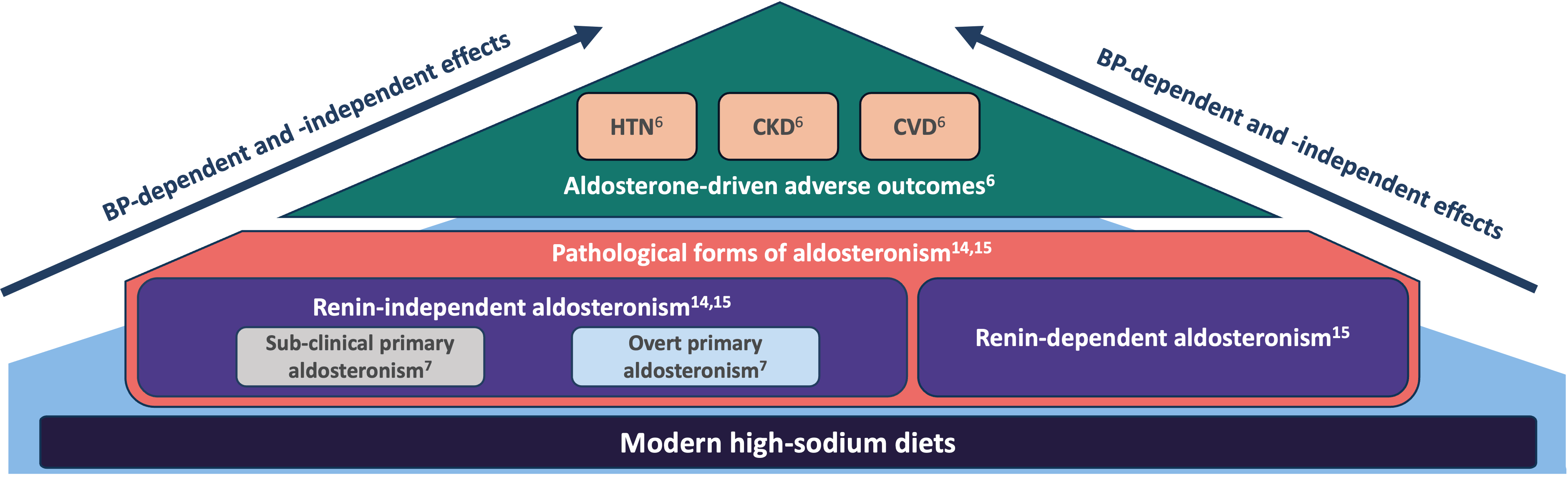
This module explores the diverse clinical contexts in which elevated levels of aldosterone contributes to adverse cardiovascular and kidney outcomes across different disease states. Click the figure below to learn more about the different mechanisms that may contribute to aldosterone-driven disease (Figure 1).
A Deep Dive into Aldosterone Dysregulation and its Impact

Figure 1. Irrespective of mechanism and action, in the context of modern high-sodium diets, elevated levels of aldosterone can drive cardiovascular and kidney damage6,14–17

BP, blood pressure; CKD, chronic kidney disease; CVD, cardiovascular disease; HTN, hypertension

THE TIP OF THE ICEBERG

Why the Pathological Role of Aldosterone
Runs Deeper
Than PA

Understanding of PA has shifted dramatically in recent decades.
Once viewed as a rare, secondary form of hypertension, typically identified only in patients with severe hypertension, hypokalaemia and an adrenal nodule, PA is now recognised as a common condition.11,18–23
This shift reflects growing appreciation of the negative
effects of excess aldosterone through mechanisms such as inflammation, oxidative stress and fibrosis (learn more in Module 2). Research has shown that patients with PA are more likely to have uncontrolled hypertension and face a higher risk of cardiovascular and metabolic complications compared to those with primary hypertension.24,25 These include stroke, coronary artery disease, atrial fibrillation, left ventricular hypertrophy, heart failure, diabetes mellitus, metabolic syndrome and kidney disease.22,26
Despite these adverse effects of aldosterone, PA remains substantially under-recognised in clinical practice,7,16,27 prompting updates in clinical practice guidelines.
The 2025 Endocrine Society Clinical Practice Guidelines conditionally recommend screening for PA in all patients diagnosed with hypertension, through measurement of aldosterone and renin, regardless of potassium status.27–29
Similarly, the 2025 American Heart Association/American College of Cardiology guideline recommends screening in patients with resistant hypertension and indicates screening may be considered in those with stage 2 hypertension.27–29
These recommendations are intended to improve detection of overt PA within high-risk
populations.
However,
accumulating evidence suggests
that the pathological role of aldosterone extends beyond
conventional biochemical
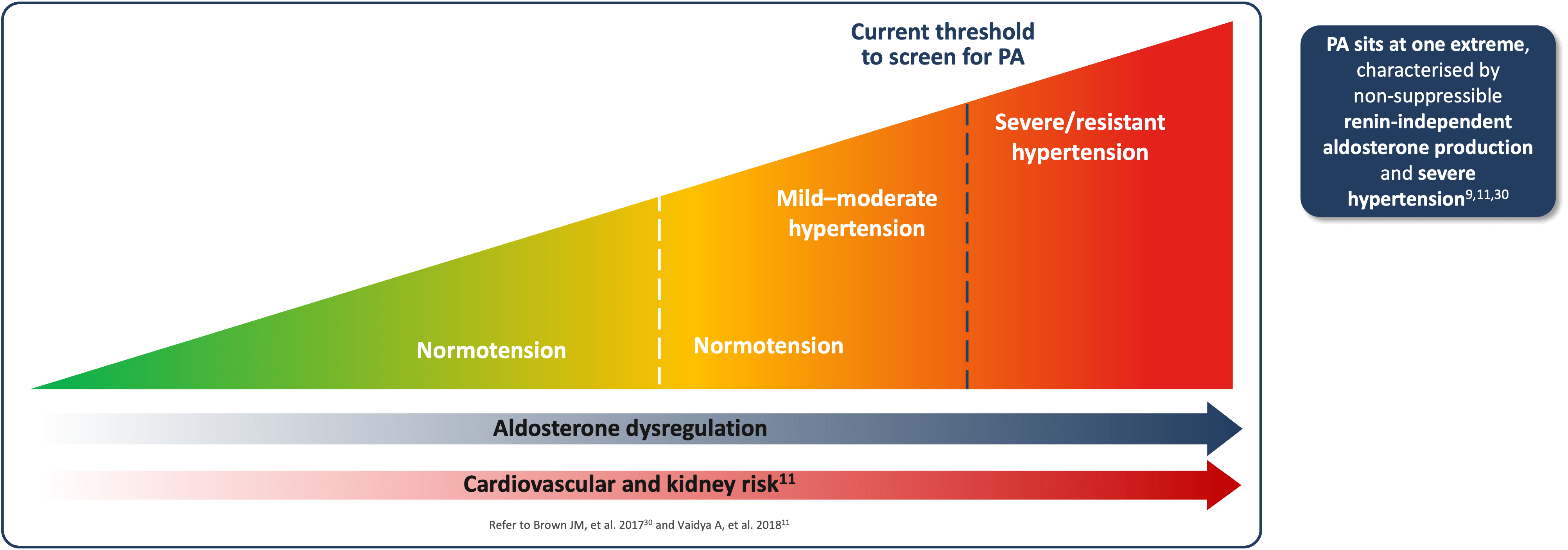
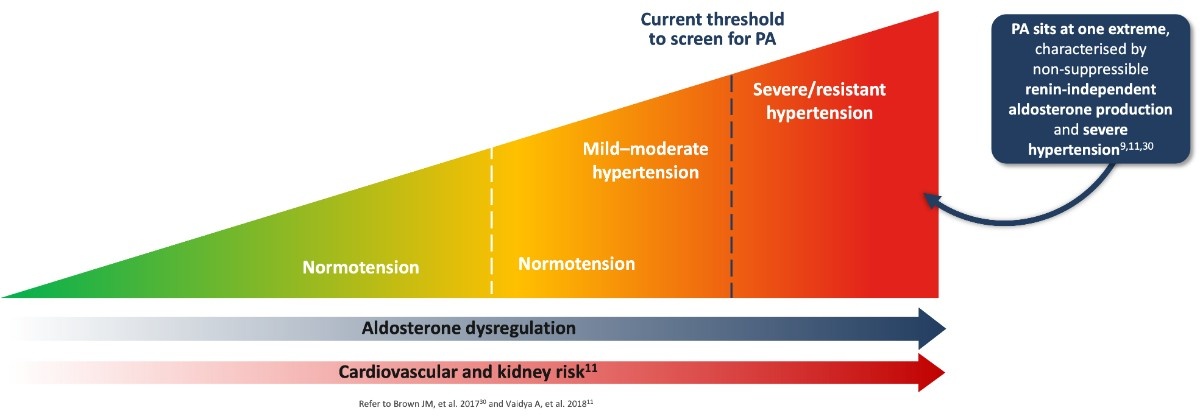
definitions of PA. Rather than representing a discrete, binary disorder, renin-independent aldosterone dysregulation appears to exist along a broad biological continuum (Figure 2).7,9,11,12
The Continuum of Aldosterone Dysregulation, With Guideline-Defined PA at One Extreme

Figure 2. The continuum of aldosterone dysregulation, with guideline-defined PA at one extreme9,11,30

PA, primary aldosteronism.

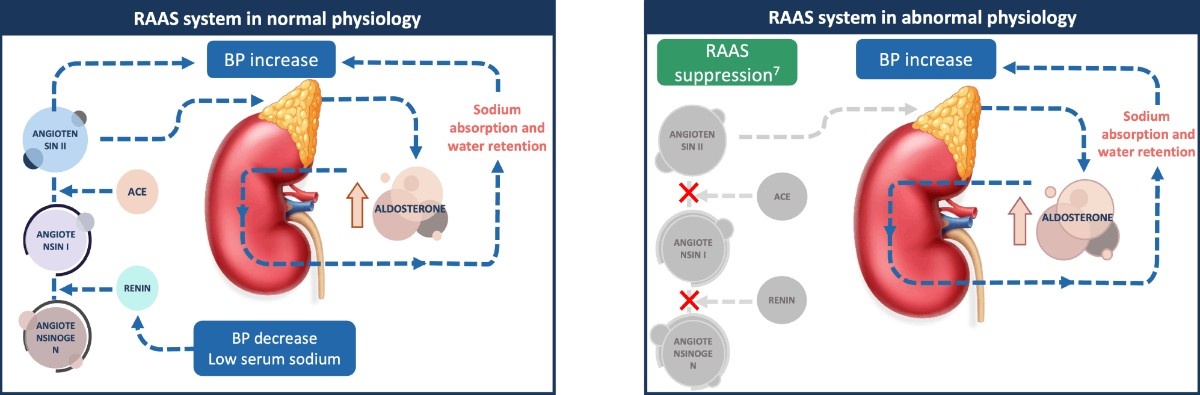
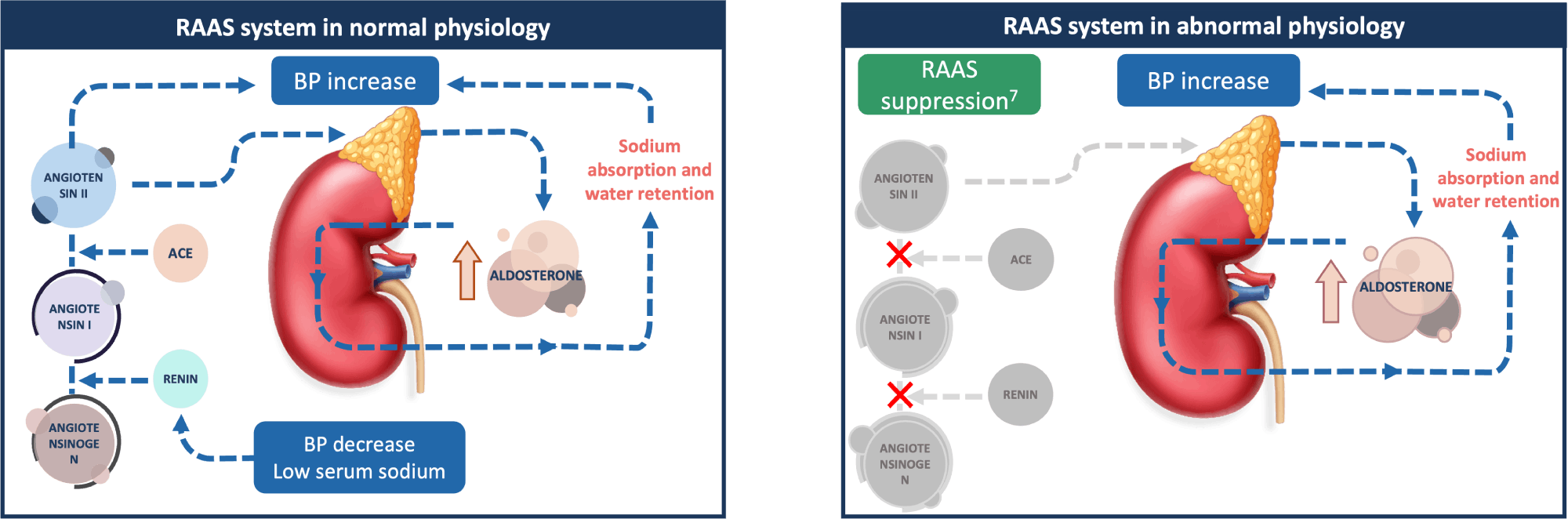
Mechanistically, renin-independent aldosterone dysregulation is autonomous aldosterone
production that persists despite physiological signals that would normally suppress it, including sodium loading and extracellular volume expansion (Figure 3).9 As
this feedback loop gradually
breaks down, aldosterone-driven sodium retention continues even when the renin–angiotensin system is suppressed, leading to plasma volume expansion and sustained elevations in blood pressure.31 This progressive loss of normal
regulation distinguishes
aldosterone dysregulation from aldosterone’s appropriate,
adaptive responses, and underpins its role as a driver of
hypertension.31 The resulting damage from inflammation and fibrosis accumulates gradually over time.32,33
Aldosterone Regulation in Normal Vs Abnormal Physiology

Figure 3. Aldosterone regulation in normal vs abnormal physiology. In abnormal physiology, aldosterone secretion often continues, despite suppression of the RAAS. This results in plasma volume expansion and increased BP6,8–10,31

ACE, angiotensin-converting enzyme; ANG, angiotensin; BP, blood
pressure; RAAS, renin–angiotensin–aldosterone system

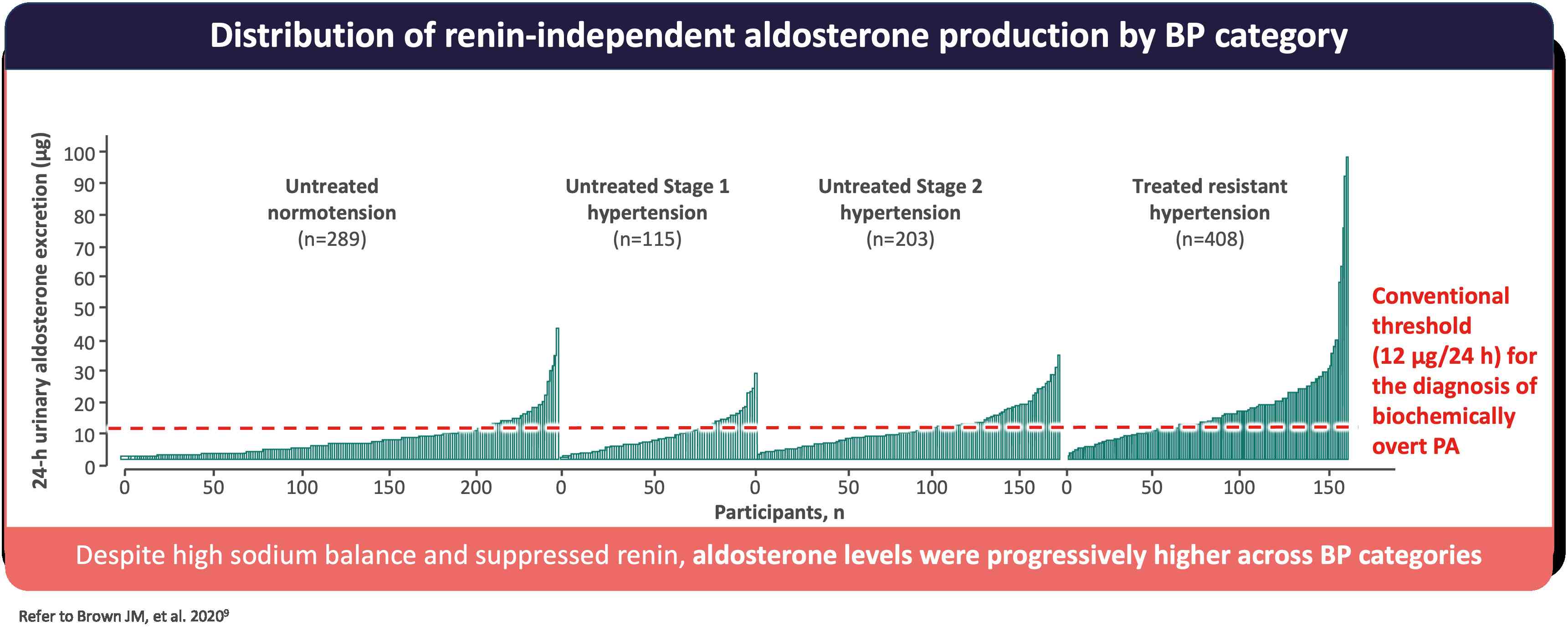
Population-based studies demonstrate that renin-independent aldosterone secretion increases progressively across blood pressure categories, with
greater severity of aldosterone dysregulation associated with
higher blood pressure,9 (Figure 4)
and aldosterone-to-renin ratio
(ARR) has been reported
as the
most important and second most important predictor of diastolic and systolic blood pressure, respectively.13
Renin-Independent Aldosterone Production Following a Saline Suppression Test

Figure 4. The continuum of non-suppressible, renin-independent aldosterone production following a saline suppression test, which parallels the magnitude of hypertension, even below conventional diagnostic thresholds9


BP, blood pressure; PA, primary aldosteronism


Taken together, these findings challenge the notion that aldosterone-driven organ damage is confined to patients who meet conventional biochemical
definitions of PA. While PA represents the most visible and severe manifestation of
aldosterone dysregulation, it captures only a portion of the broader spectrum encountered in clinical practice.9,11

Aldosterone Dysregulation is a Key Driver of
Uncontrolled Hypertension

Clinical and real-world evidence shows that aldosterone dysregulation is a major driver of hypertension. In patients with resistant hypertension, mineralocorticoid receptor antagonism by spironolactone has been shown to produce the greatest blood pressure reductions, particularly in those with suppressed renin or higher ARR.9,24,34 This pattern reflects a sodium-retaining, dysregulated state and suggests that aldosterone activity may contribute to hypertension, even in the absence of overt PA.9,24,34
BREAKTHROUGH risk study
Real-world evidence further reinforces this concept. In the BREAKTHROUGH risk study, aldosterone dysregulation was associated with inadequately controlled hypertension, even at lower thresholds
(≥5 ng/dL and ≥10 ng/dL), in patients with low renin. These observations again indicate that clinically relevant thresholds for aldosterone dysregulation, in the presence of low renin, may be lower than previously recognised.27
Together, these data highlight aldosterone dysregulation is a common mechanistic driver of uncontrolled hypertension, rather than a feature confined to rare endocrine disorders.9,27

Aldosterone Dysregulation is Associated with
Cardiovascular Risk

Beyond its role in hypertension, inappropriate aldosterone signalling contributes directly to cardiovascular injury. A growing body of evidence shows that the degree of aldosterone dysregulation is associated with an increased risk of adverse cardiovascular outcomes.15,25,35
For example, a meta-analysis of 31 studies comparing patients with PA (n=3838) with those with primary hypertension (n=9284) demonstrated that presence of aldosterone dysregulation was associated with a significantly
higher risk of multiple
cardiovascular events, including:25

~2-fold

increased risk of coronary artery disease

~3.5-fold

increased risk of atrial fibrillation

~2-fold

increased risk of heart failure

~2.6-fold

increased risk of stroke
Importantly, cardiovascular risk is not confined to patients who meet traditional diagnostic thresholds
for PA.9,11,30 Elevated ARR, even below guideline-defined cut-offs
for PA,21,28 has been associated with
a significantly higher risk of
major adverse cardiovascular
events (MACE), defined as a
composite of myocardial infarction, stroke (ischaemic or haemorrhagic), hospitalisation for heart failure and cardiovascular death.11,15,35
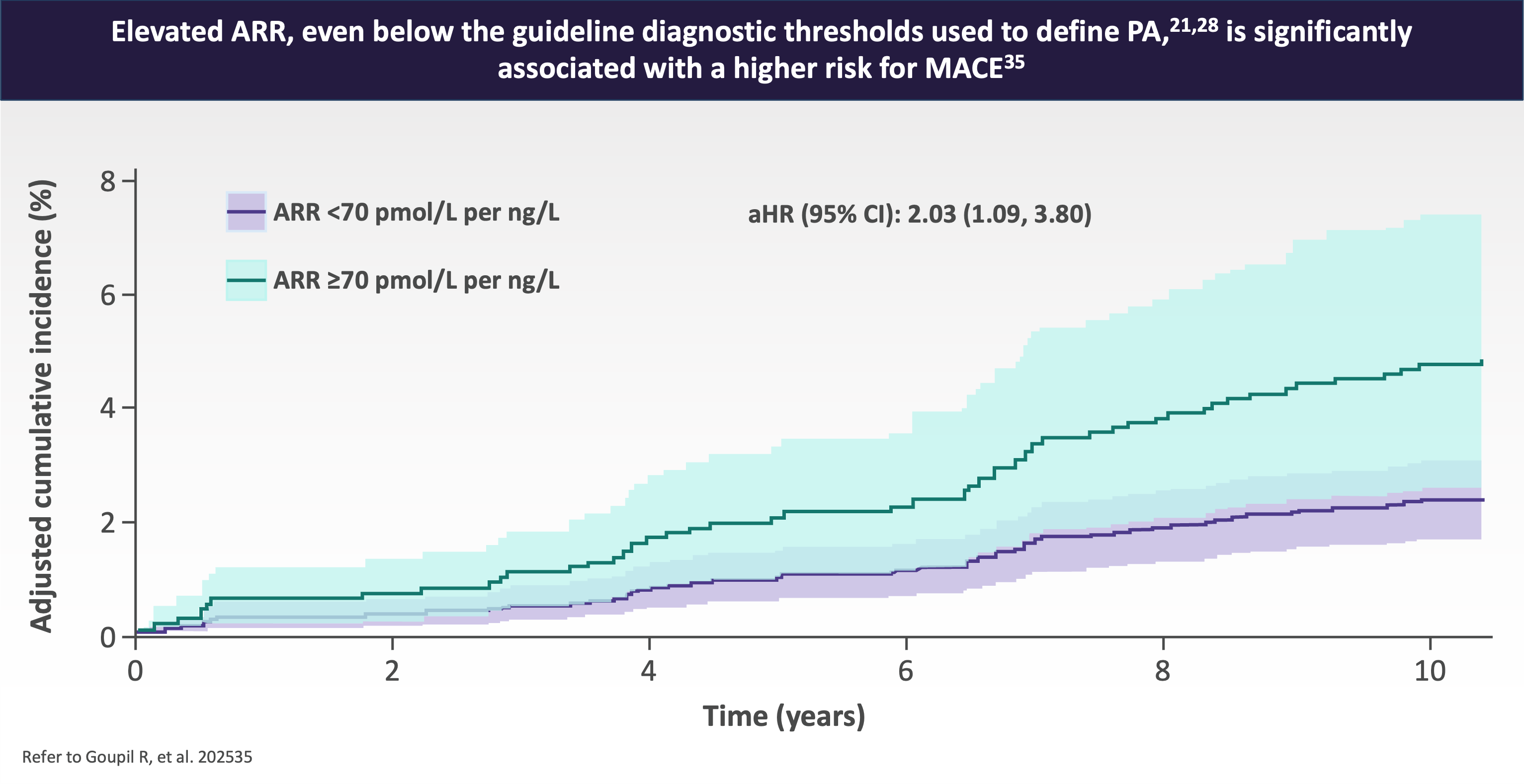
CARTaGENE cohort
Prospective population-based data from the CARTaGENE cohort (n=2017 Canadian adults aged 40–69 years) further support this concept. Over a median follow-up of 10.8 years, higher ARR was independently associated with a more than 2-fold increased risk of MACE.35 Notably, elevated ARR even below the guideline diagnostic thresholds for PA were significantly associated with increased cardiovascular risk (Figure 5).21,28,35
Adjusted Cumulative Incidence of MACE Over 10.8 Years By Baseline ARR

Figure 5. Adjusted cumulative incidence of MACE over 10.8 years by baseline ARR (<70 vs ≥70 pmol/L per ng/L)35


aHR, adjusted hazard ratio; ARR, aldosterone-to-renin ratio; CI, confidence interval; MACE, major adverse cardiovascular
events; PA, primary aldosteronism

These findings reinforce the concept that aldosterone-driven disease does not require markedly elevated aldosterone concentrations, but rather reflects inappropriate aldosterone activity relative to other components of the system.16
The cardiovascular risk associated with aldosterone dysregulation appears to be mediated not only by haemodynamic effects, but also by direct actions of aldosterone on the heart and vasculature, including inflammation, fibrosis, endothelial dysfunction and adverse cardiac remodelling.6 Further discussion of the blood pressure-independent mechanisms of aldosterone-driven end-organ damage is covered in Module 2.

Multiple Pathways to Aldosterone-Mediated Organ
Damage

Under normal physiological conditions, high dietary sodium intake leads to suppression of the RAAS. Both renin and aldosterone levels fall appropriately, limiting sodium retention and preventing excessive plasma volume expansion.1 In contrast, pathological aldosterone signalling can arise through more than one mechanism. Much of this module has focused on renin-independent aldosterone dysregulation, in which aldosterone secretion persists despite low renin and sodium loading.9,10,31 However, in some patients, renin-dependent aldosteronism occurs where both renin and aldosterone levels are abnormally elevated,
reflecting ongoing RAAS activation.15,36 This pattern is commonly referred to as secondary aldosteronism.18
In modern high-sodium environments, persistent activation of the RAAS, with inappropriately elevated
renin and aldosterone relative to sodium and volume status, may also promote adverse downstream
effects.36–38
A state of aldosterone–sodium mismatch
A recent phenotyping
study suggests that reliance on ARR alone may underestimate patients experiencing aldosterone-driven disease, and proposed that aldosterone pathology is best
understood as a state of aldosterone–sodium mismatch, in which aldosterone levels are excessive for
the level of dietary sodium intake regardless of whether the aldosterone regulation is renin-dependent or independent.36
Renin-dependent mechanisms are particularly relevant in conditions such as chronic kidney disease,
diabetes, obesity, heart failure and renovascular disease,18,38,39 in which aldosterone-mediated organdamage may involve factors beyond aldosterone concentration alone. Described mechanisms include:37,38
•Increased MR expression or stability.
•Heightened receptor sensitivity driven by post-translational modification.
•MR overstimulation by alternative signalling pathways such as Rac1.
Such mechanisms support a model
in which MR activity in the setting
of high dietary sodium intake can become maladaptive, and may help to explain the role of aldosterone signalling across diverse clinical contexts, although further research is needed to fully characterise clinical relevance.
Across these mechanistic pathways, dysregulated aldosterone activity ultimately converges on shared downstream consequences, driving hypertension, cardiovascular
disease and kidney injury in modern high-sodium environments6,14–17 (Figure 1).
In summary, aldosterone-driven organ damage is not confined to a single disease entity or diagnostic label. Across diverse clinical
contexts and mechanistic pathways, aldosterone dysregulation emerges as a key contributor to uncontrolled hypertension and cardiovascular
and kidney risk, underscoring the need to effectively understand aldosterone pathways.

  1. Strizzi CT, et al. Int J Mol Sci 2025;26:8829
  2. Ekman N, et al. Int J Mol Sci 2025;26:540
  3. Bioletto F, et al. Int J Mol Sci 2022;23:4803
  4. Graudal N, et al. Sci Rep 2023;13:19027
  5. Verhovez A, et al. Curr Signal Transduc Ther 2012;7:132–141
  6. Brown JM. J Am Heart Assoc 2024;13:e030142
  7. Vaidya A, et al. Am J Hypertens 2022;35:967–988
  8. Inoue K, et al. Hypertension 2020;76:113–120
  9. Brown JM, et al. Ann Intern Med 2020;173:10–20
  10. Vasan RS, et al. N Engl J Med 2004;351:33–41
  11. Vaidya et al. Endocr Rev 2018;39:1057–1088
  12. Parksook WW, et al. J Clin Endocrinol Metab 2024;109:2220–2232
  13. Tomaschitz A, et al. Eur Heart J 2010;31:1237–1247
  14. Vaidya A, Carey RM. J Clin Endocrinol Metab 2020;105:3771–3783
  15. Hu J, et al. J Am Heart Assoc 2021;10:e023082
  16. Azizan EAB, et al. Nat Rev Nephrol 2023;19:788–806
  17. Byrd JB, et al. Circulation 2018;138:823–835
  18. Cleveland Clinic. Hyperaldosteronism. Available at: https://my.clevelandclinic.org/health/diseases/16448-hyperaldosteronism (Accessed April 2026)
  19. Azizan EAB, et al. Nat Rev Nephrol 2023;19:788–806
  20. Kadarusman TA, et al. Acta Med Indones 2025;57:525–530
  21. Funder JW, et al. J Clin Endocrinol Metab 2016;101:1889–1916
  22. Monticone S, et al. J Am Coll Cardiol 2017;69:1811–1820
  23. Hundemer GL, et al. Endocrinol Metab Clin North Am 2019;48:681–700
  24. Williams B, et al. Lancet 2015;386:2059–2068
  25. Monticone S, et al. Lancet Diabetes Endocrinol 2018;6:41–50
  26. Buffolo F, et al. Hypertension 2022;79:1899–1911
  27. Townsend RR, et al. Am J Hypertens 2026;39:161–170
  28. Adler GK, et al. J Clin Endocrinol Metab 2025;110:2453–2495
  29. Jones DW, et al. Hypertension 2025;82:e114-e218
  30. Brown JM, et al. Ann Intern Med 2017;167:630–641
  31. Papadopoulou-Marketou N, et al. Hyperaldosteronism. In: Endotext [Internet]. South Dartmouth (MA): MDText.com, Inc. Last Update: February 16, 2026
  32. Chen ZW, et al. Horm Metab Res 2024;56:99–106
  33. Owei L, et al. Hypertension 2026;83:e26228
  34. Williams B, et al. Lancet Diabetes Endocrinol 2018;6:464–475
  35. Goupil R, et al. Circulation 2025;152:00–00
  36. Parisien-La Salle S, et al. medRxiv [Preprint] 2025. doi: 10.1101/2025.11.18.25340514
  37. Shibata H, Itoh H. Am J Hypertens 2012;25:514–523
  38. Jo R, et al. Hypertens Res 2024;47:2126–2132

AstraZeneca Logo
Cookie Policy Legal Notice and Terms of Use Privacy Notice Contact Us Report Adverse Events

©2026 AstraZeneca. All rights reserved. Z4-80196 Last Updated May 2026

Module Contents
Introduction to the Mechanisms by Which Excess Aldosterone Contributes to Cardiovascular and Kidney Damage
The Tip of the Iceberg: Why the Pathological Role of Aldosterone Runs Deeper than PA
Aldosterone Dysregulation is a Key Driver of Uncontrolled Hypertension
Aldosterone Dysregulation is Associated with Cardiovascular Risk
Multiple Pathways to Aldosterone-Mediated Organ Damage

A Deep Dive into Aldosterone Dysregulation and its Impact

The Continuum of Aldosterone Dysregulation, With Guideline-Defined PA at One Extreme

Aldosterone Regulation in Normal Vs Abnormal Physiology

Renin-Independent Aldosterone Production Following a Saline Suppression Test

Adjusted Cumulative Incidence of MACE Over 10.8 Years By Baseline ARR

Think Aldo logo image

Welcome to Think Aldo

Welcome to Think Aldo, an expert-led initiative advancing knowledge and science around an often overlooked driver of hypertension and cardiovascular and kidney disease: aldosterone.1,2

This website provides the latest scientific insights and educational resources, curated by a network of experts, and is intended for healthcare professionals.

Are you a healthcare professional?

I am not a healthcare professional I am a healthcare professional

This non-promotional medical education website has been developed by AstraZeneca and is intended for healthcare professionals outside of the US.
 

References
1 Papadopoulou-Marketou N, et al. Hyperaldosteronism. In: Endotext [Internet]. South Dartmouth (MA): MDText.com, Inc. 2000
2 Vaidya A, et al. Am J Hypertens 2022;35:967–988
AZ-logo
Legal Notice and Terms of Use Privacy Notice Contact Us Report Adverse Events

©2026 AstraZeneca. All rights reserved. Z4-80196 Last Updated May 2026